Exhibition-performance
Duration 1h or self-guided visit
Ages 8 and up
Premiere January 2007
Summary:
Car keys, mirrors, telephones, urinals, coins and olive pits all have the surprising ability to record and store life moments: this was something that Dragomir Vadrok, the Bulgarian inventor of mnemology, came to realise. Drawing inspiration from his controversial work, Vadrok’s grandson Eric Vadrok, with help from the ever-versatile members of La Bande Passante, was able to build curious machines capable of ‘hearing’ snatches of everyday life enclosed in certain objects. A technician is on hand to welcome the audience, guiding them among these eight, extremely lifelike prototypes. Individuals are then able to handle these “items of evidence” themselves and to listen to true stories, whether humorous or tragic. Built like a practical joke, Compléments d’Objets creates a humorous setting in both its performance form and its installation form, where audiences are invited to intrude into the lives of others and to consider the previously unimagined capacity of objects to bear witness to our past.
What if objects had ears (and a memory)?
The first performance created by Benoît Faivre was born out of a desire to give life to minor news items taken from newspapers. Having developed a fascination with these stories, many of which are so strange as to seem fictitious, he devised a performance-installation where fiction lends a greater sense of credibility to real life. Objects from daily life that you love, discard or consume all come together to form the memory of events that we have witnessed. Car keys give us the chance to hear what happened before a bizarre accident, while listening to beer caps gives us the story of a drunken night gone wrong. Just like in real life, the seemingly banal can turn to tragedy in the blink of an eye. In the work of Benoît Faivre, equal attention is paid to the memories housed in a famous work of art by Marcel Duchamp as to the family stories preserved in a wardrobe or the glimpses of the lives of hotel guests captured by a mirror. Through mnemology, La Bande Passante gives an extraordinary, romantic dimension to the everyday.
Eight DIY machines can be explored freely or become a performance, guided by a scientist
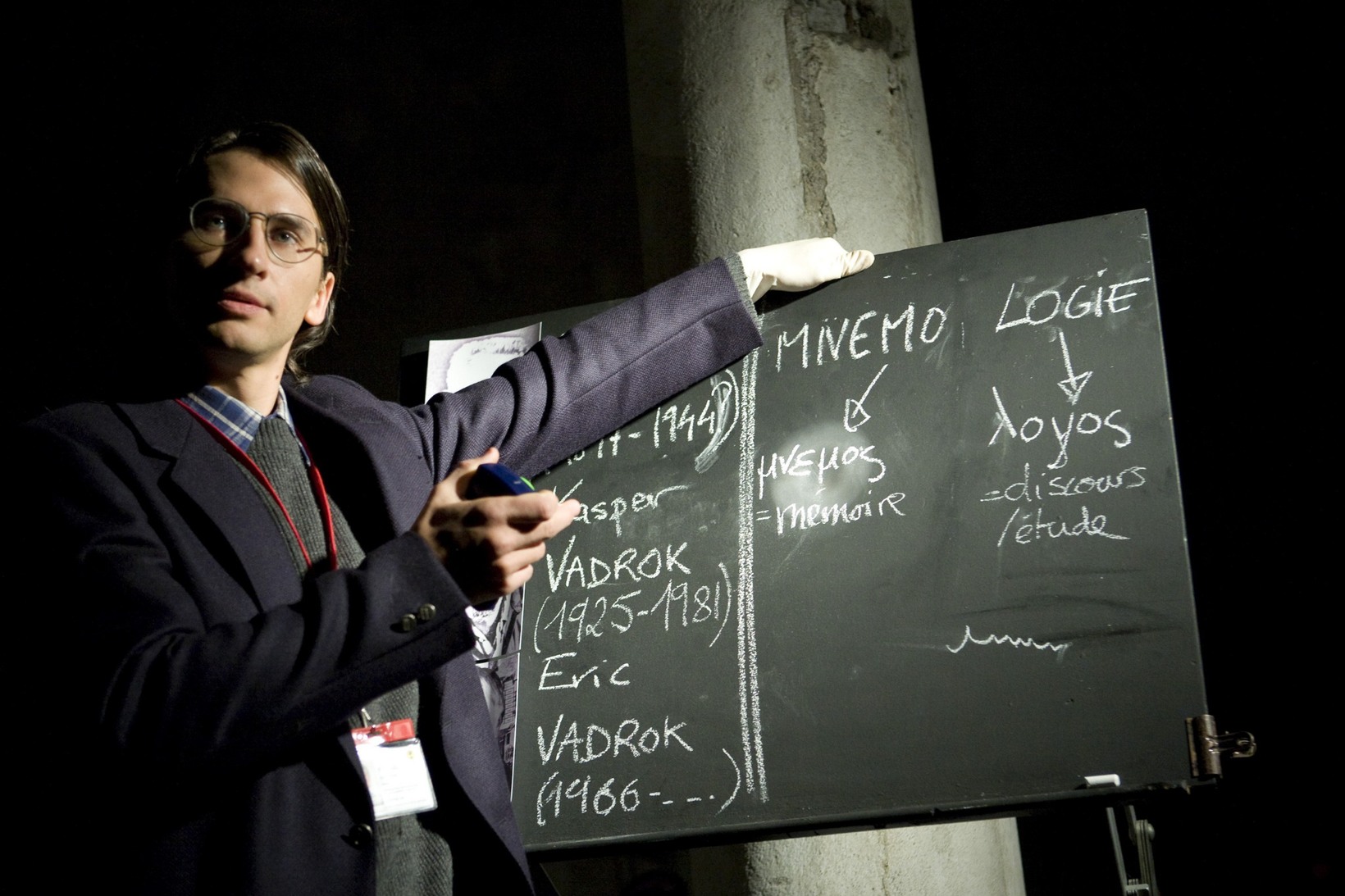
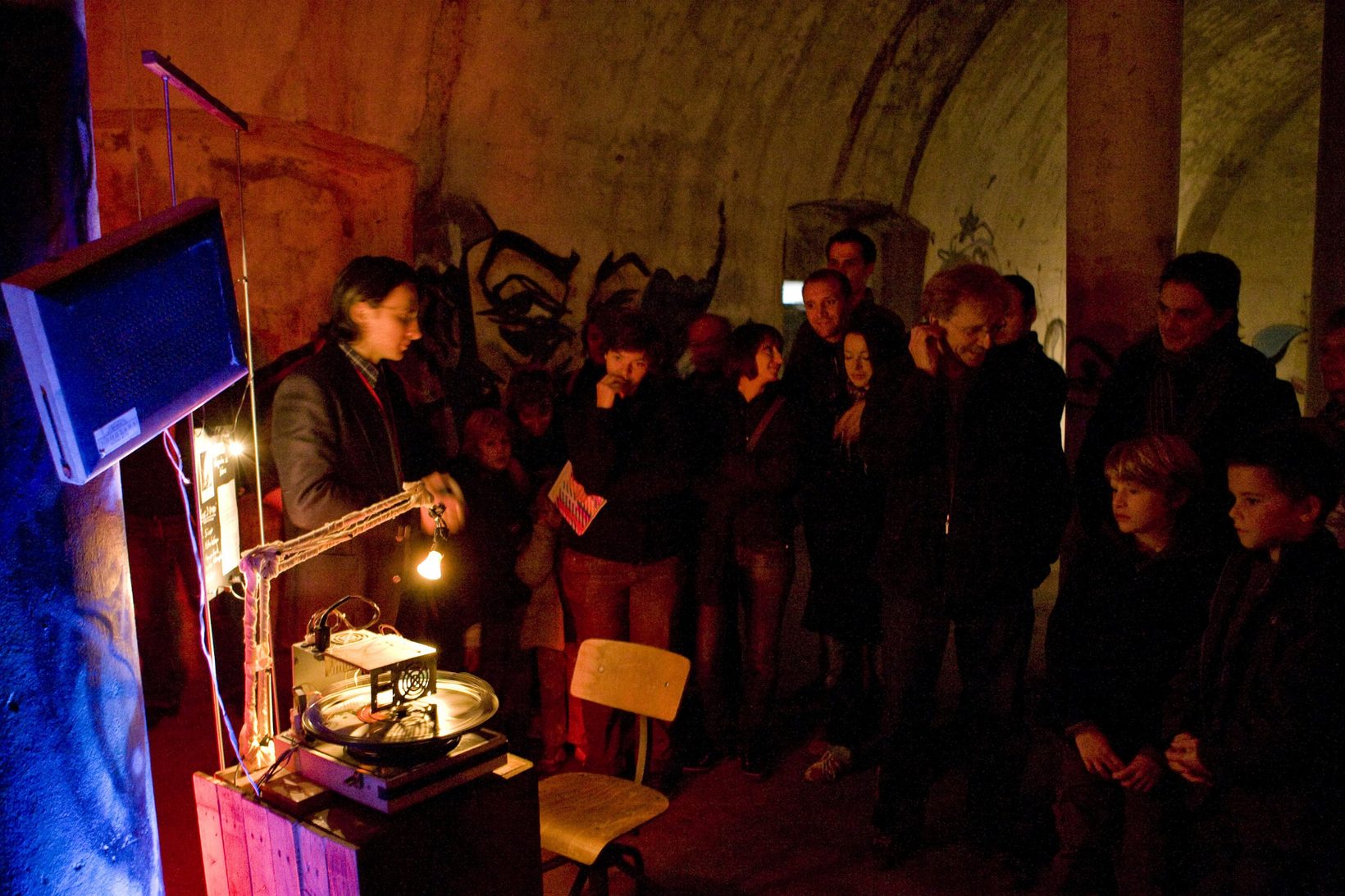
Through the eight interactive machines of which Compléments d’Objets is comprised, audiences are invited to listen to the stories individually using headsets or to listen to them as a group. Each machine is the result of a seemingly thrown-together DIY project using retro objects: corded telephones, audio tape reels, a wardrobe found in a second-hand shop, etc. Using sound, light and video, “animated” objects are imbued with stories. Benoît Faivre, who is also a creator of sounds and a specialist in sound effects, wrote and “aired” the soundtracks, all of which are radio fictions. Depending on the location, Compléments d’Objets can be changed into a performance-installation or a simple exhibition. In the first instance, a scientific researcher played by Benoît Faivre introduces the principles of mnemology and guides the public among these “Interactive Memory Machines”. In the second instance, the public are free to move around and activate the DIY machines themselves. An old-fashioned computer converted into a learning terminal will provide visitors with everything they need to know about mnemology.
The eight machines:
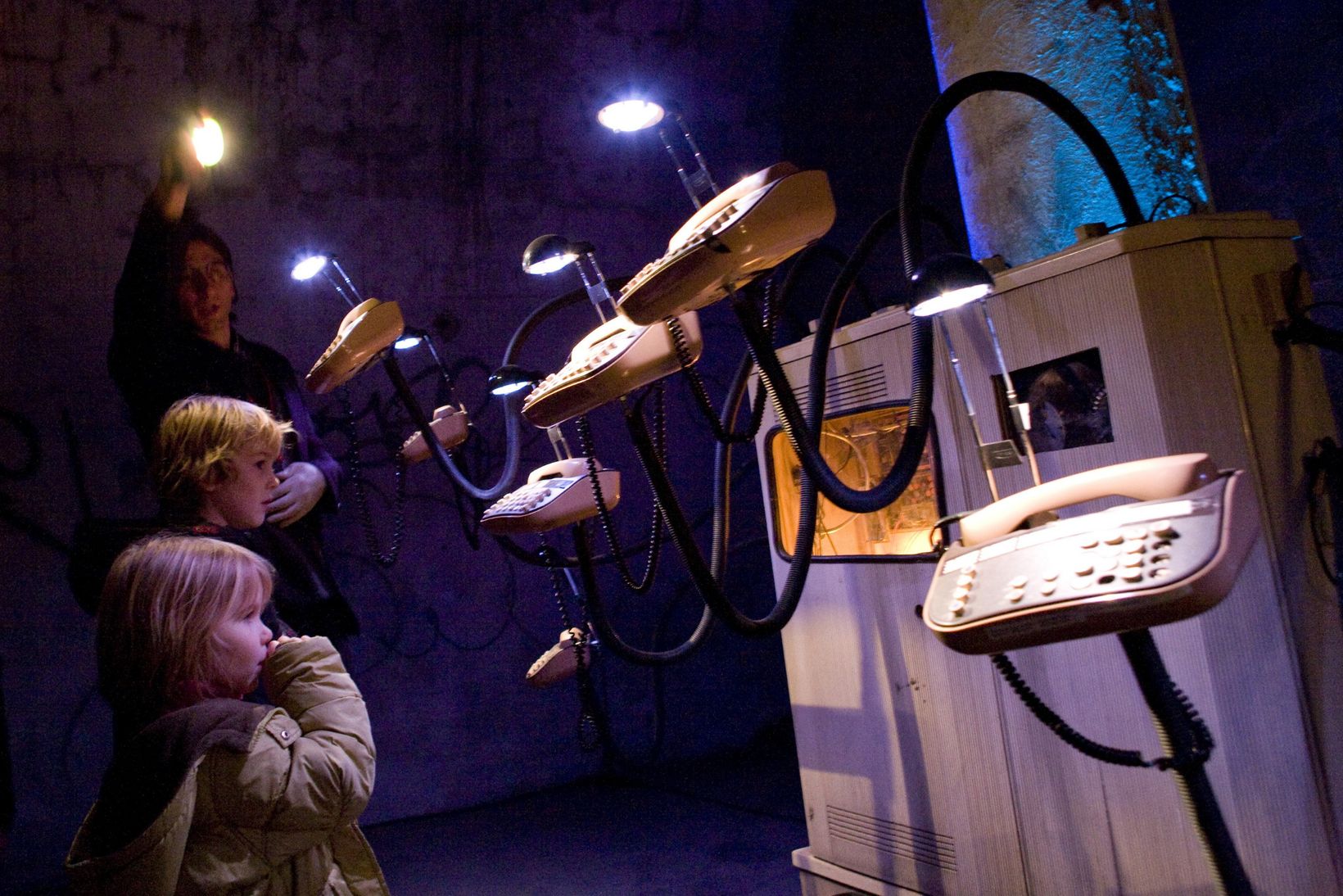
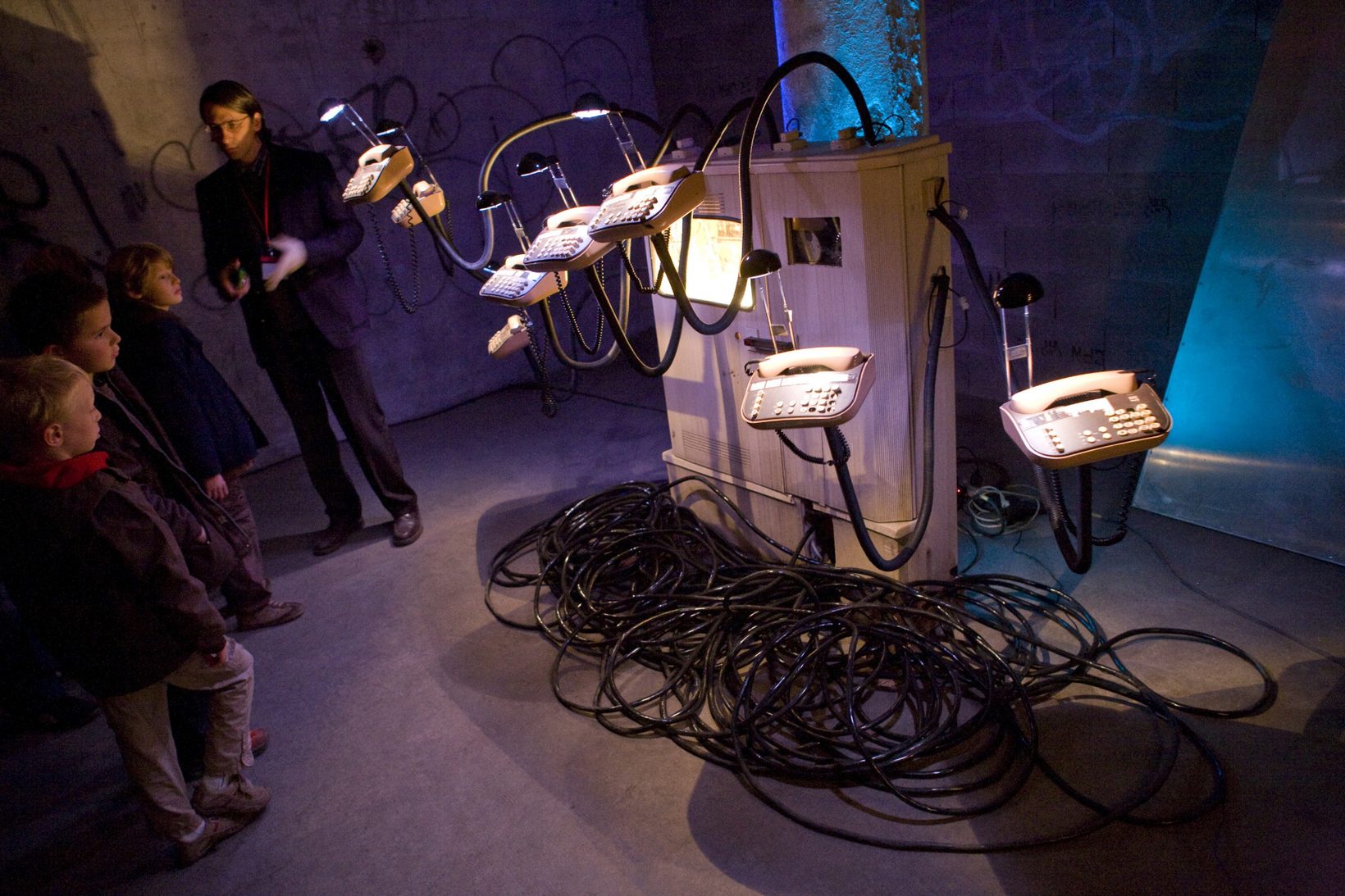
“Hold On” (object: telephone cables)
With 8 telephones, a review of social relations in the workplace. Collective listening through the 8 handsets, 34 conversations in chronological order.
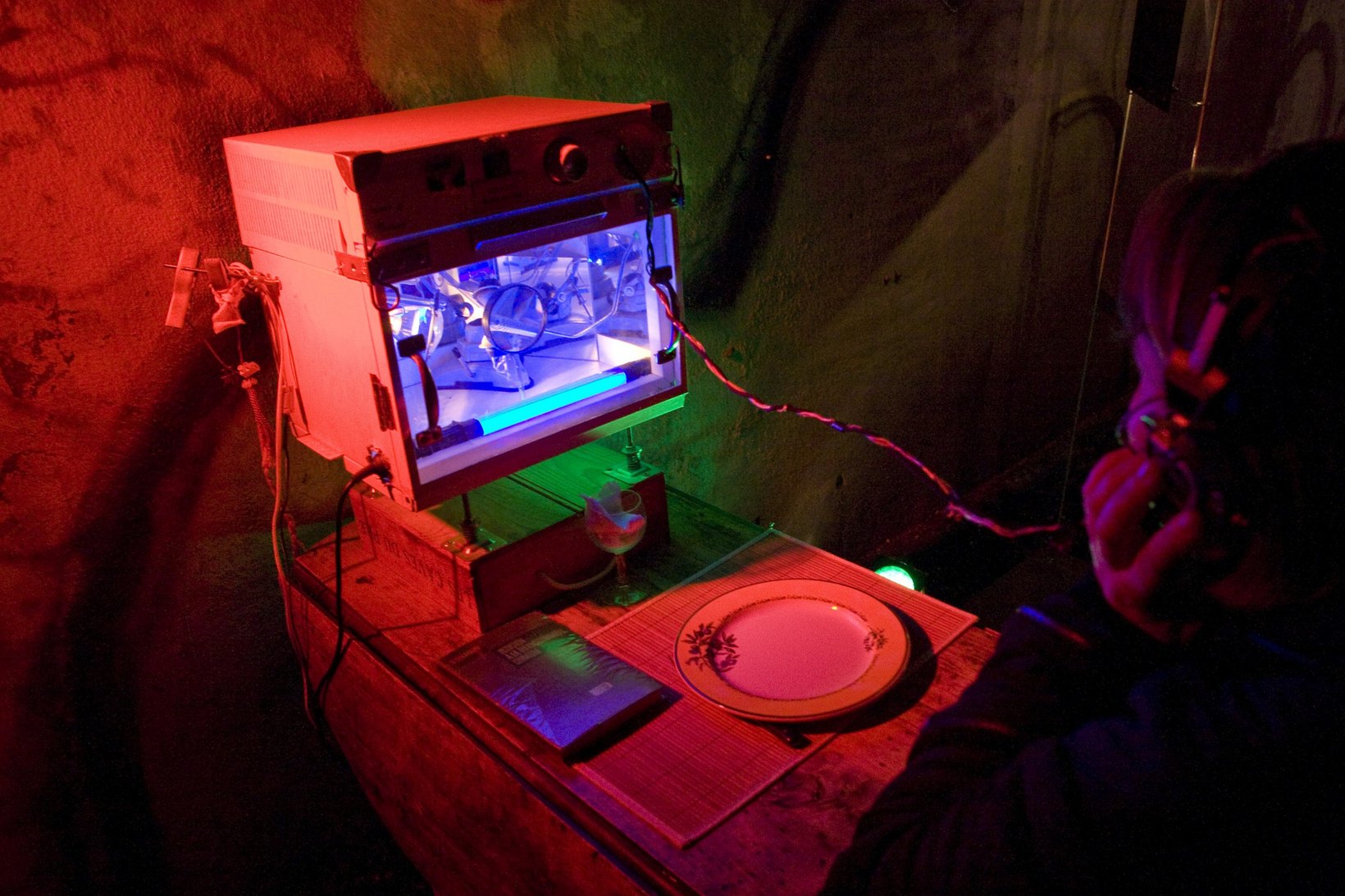
“Olive’s Stone” (object: an olive pit)
5 minutes in the life of an olive pit, starting from a pizza delivery shop. Individual listening on headphones. Floor space: 2 m².
“Ruine Urine” (object: remains of Marcel Duchamp’s “Fountain”)
Memories of Marcel Duchamp’s famous Dada work before its destruction by the artist Pierre Pinoncelli. Headphone listening for 2 people. Floor space: 4 m².
“Ca/ops” (object: beer caps)
During a drunken evening in a police station in Nantes, a police officer is killed by his own service weapon. The caps collected on site in large numbers make it possible to reconstruct the events. Individual listening on headphones. Floor space: 3 m².
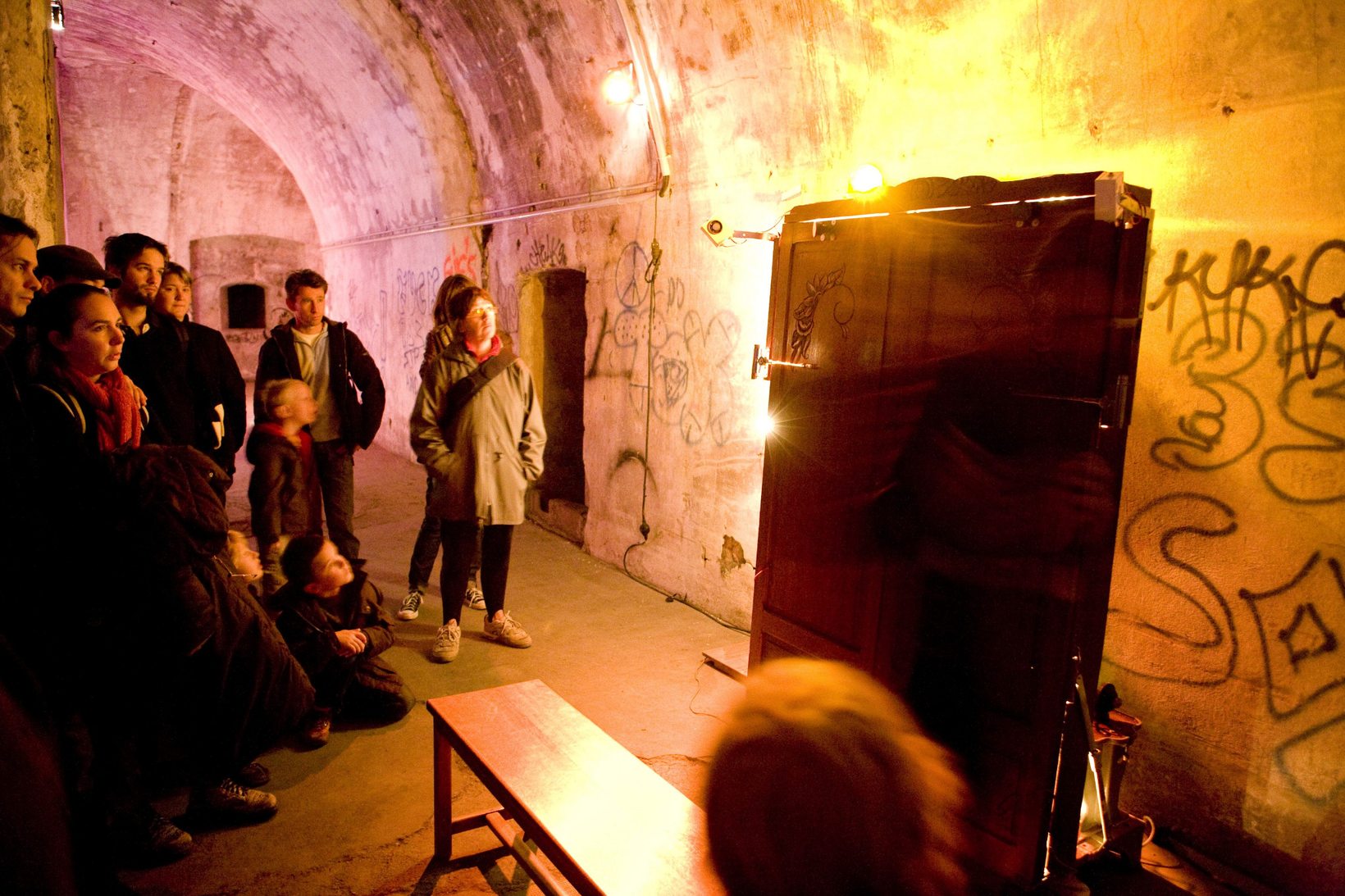
“Tant de beaux draps” (object: wardrobe doors)
Memories recorded by the doors of a family wardrobe. A sound search among the sheets, photos and keepsakes. Collective listening, 9 memories in chronological order. Floor space: 4 m².
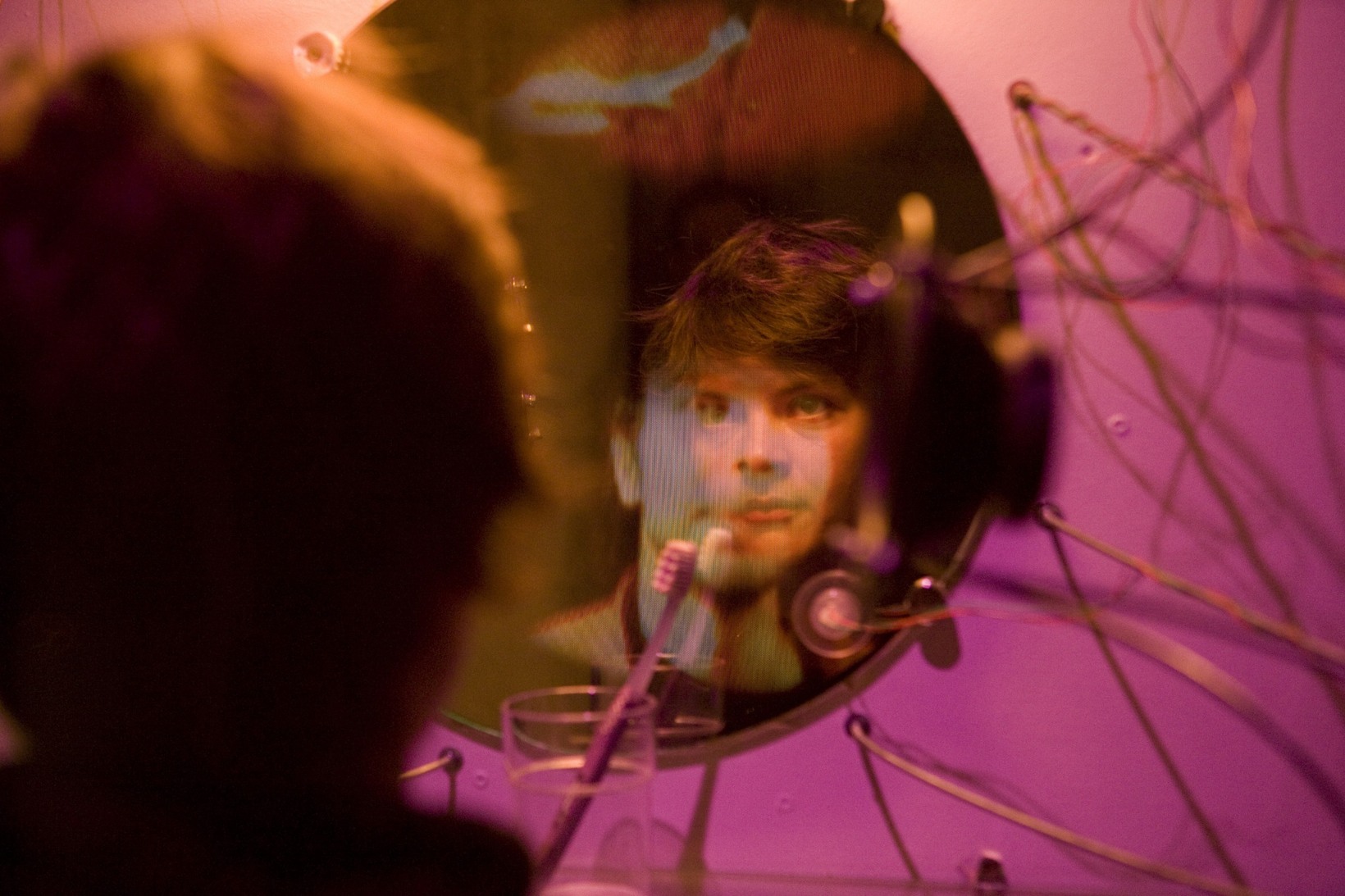
“Chambre 13” (object: a mirror)
Memories recorded by a mirror in the bathroom of a hotel room. Collective listening, 16 random audiovisual memories. Floor space: 2 m².
“Tôle Errance Zéro” (object: car keys)
A family buys a 4×4. Just out of the dealership, it breaks down on a level crossing. Listening for 4 people, speakers built into car seat headrests. Floor space: 9 m².
“Borne pédagogique interactive” [interactive learning terminal] (object: an educational programme)
History, scientific foundations, applications and issues of mnemology. Listening for 2 people. Floor space: 9 m².
“Using items invented by Erik Vadrok, the grandson of the inventor of mnemology, Benoît Faivre has put this hidden memory back together. Acting with total impunity, visitors become intrusive witnesses to the lives of others, listening to things they should never have had the opportunity to hear.”
Thierry Voisin, Télérama Sortir (TTT), 12 May 2010
“What is certain is that with mnemology, we travel between science and poetry. Thanks to it, we look at the objects around us with fresh eyes, telling ourselves that science, fortunately, has not solved every mystery…”
OMNI, the newspaper of the Théâtre de la Marionnette à Paris, spring 2010
“Cinema for the ears” and a reflection on our relationship to things, conducted with humour
N.D., L’Ardennais, 21 September 2009
“This subversion questions, in a zany and playful way, our relationship to objects. Do we always leave traces in them? A big question…”
Sophie Dougnac, L’Est Républicain, 6 November 2009
At a glance:
- Premiere in January 2007 at the Centre culturel Pablo-Picasso, Homécourt
- Two formats: guided performance-installation (1 h) or self-guided exhibition
- Capacity: up to 35 people at a time, 5 visits per day maximum
- Touring team: 2 artists, Benoît Faivre and Julien Goetz
- Set-up: 3 four-hour sessions; dismantling: 1 four-hour session
- Set: 8 interactive sound machines, including an educational terminal
- Exhibition space: 90 m², ideally in semi-darkness, preferably divided into 2 or 3 areas (a reception area, a room for “Tant de beaux draps” and a dark space for the projection of “Ruine Urine”)
- Registered with the SACD, no minimum royalty
Touring contacts:
Benoît Faivre: +33 (0)6 69 42 59 56 · diffusion@ciebandepassante.fr